
Tools for the Machine
This case study describes two toolkit features: synchronizing interaction across multiple charts, and allowing a coding agent to inspect and update an application through browser tools.
Chart interactions use shared events, while browser tools expose named application operations to coding agents.
Synchronizing chart interactions
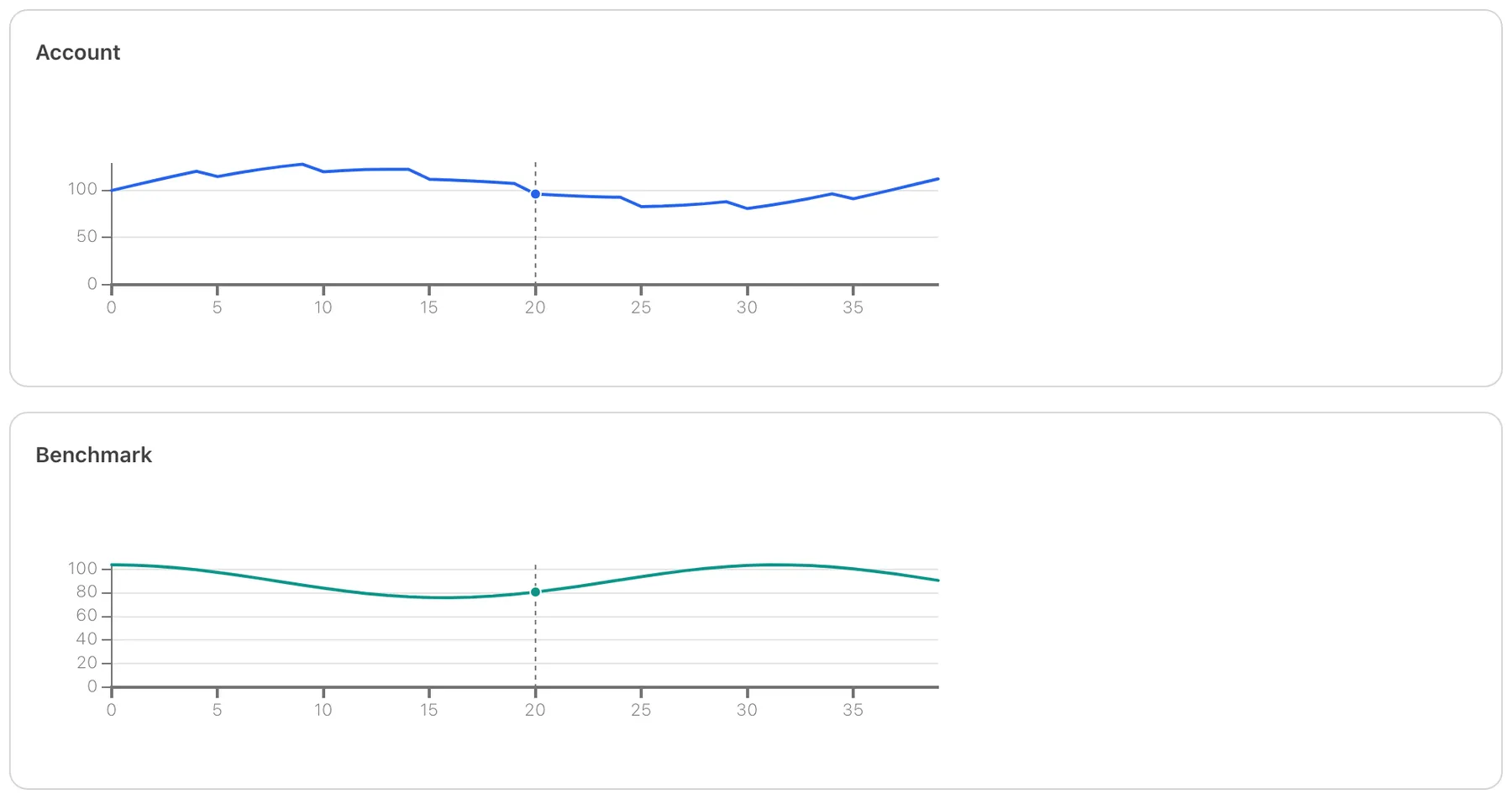
A risk dashboard can contain eight charts stacked on a shared time axis. Comparing values at the same point in time requires coordinating the cursor across all of them.
Charts in a group share an event emitter. A pointer position from one chart is sent to the others, which display a cursor at the corresponding value on their own scales. Each chart subscribes to the event stream independently.
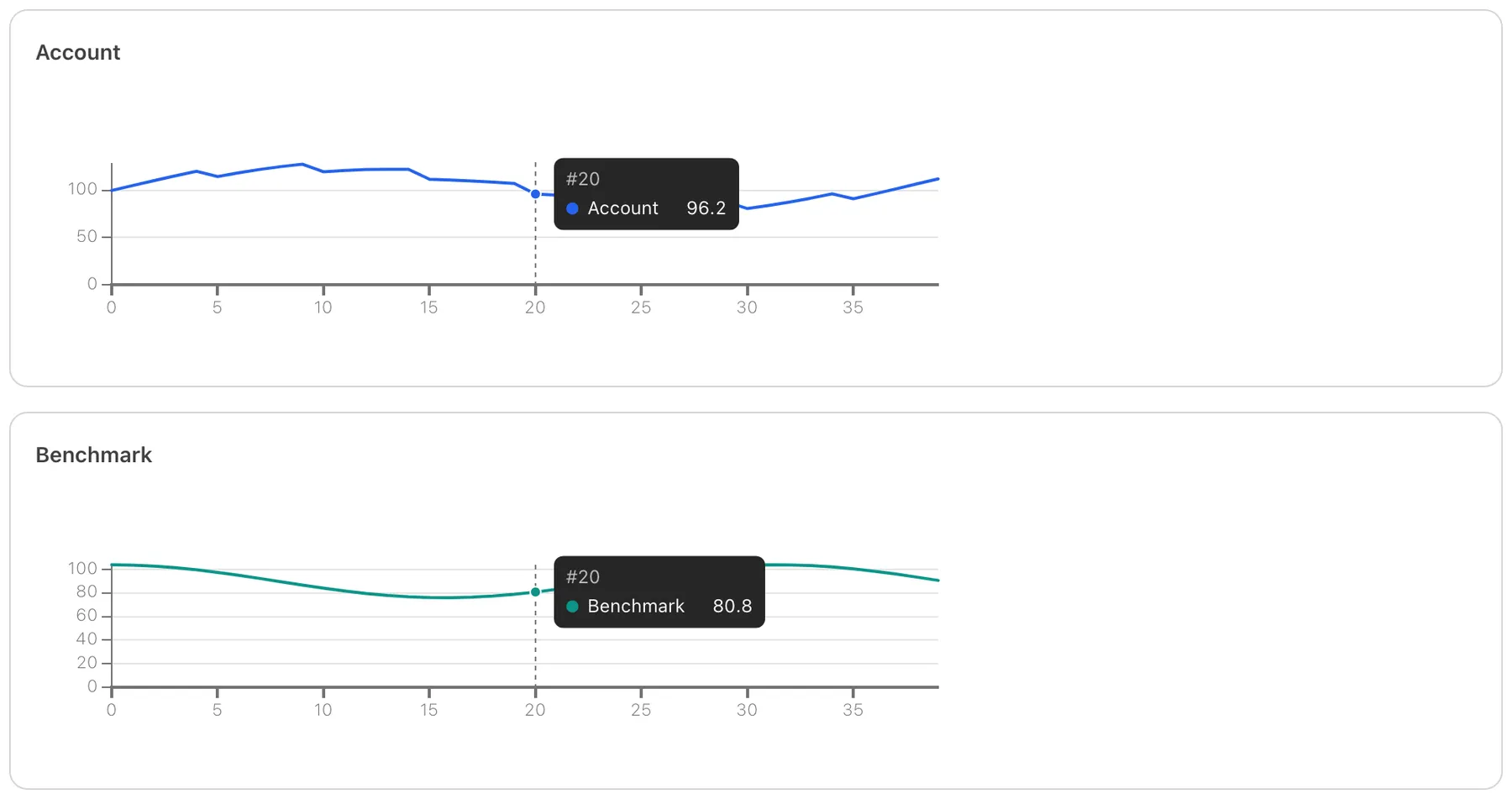
A combined tooltip reads the shared cursor state and reports the value of each series at that position.
Subscriptions are per key, so pointer movement does not re-render every widget. Series with more than 1,000 points are downsampled using largest-triangle-three-buckets or min/max-per-pixel, depending on whether the overall shape or local extrema matter.
Browser tools for coding agents
The browser publishes named tools that an MCP-connected harness can call to inspect and update the application.

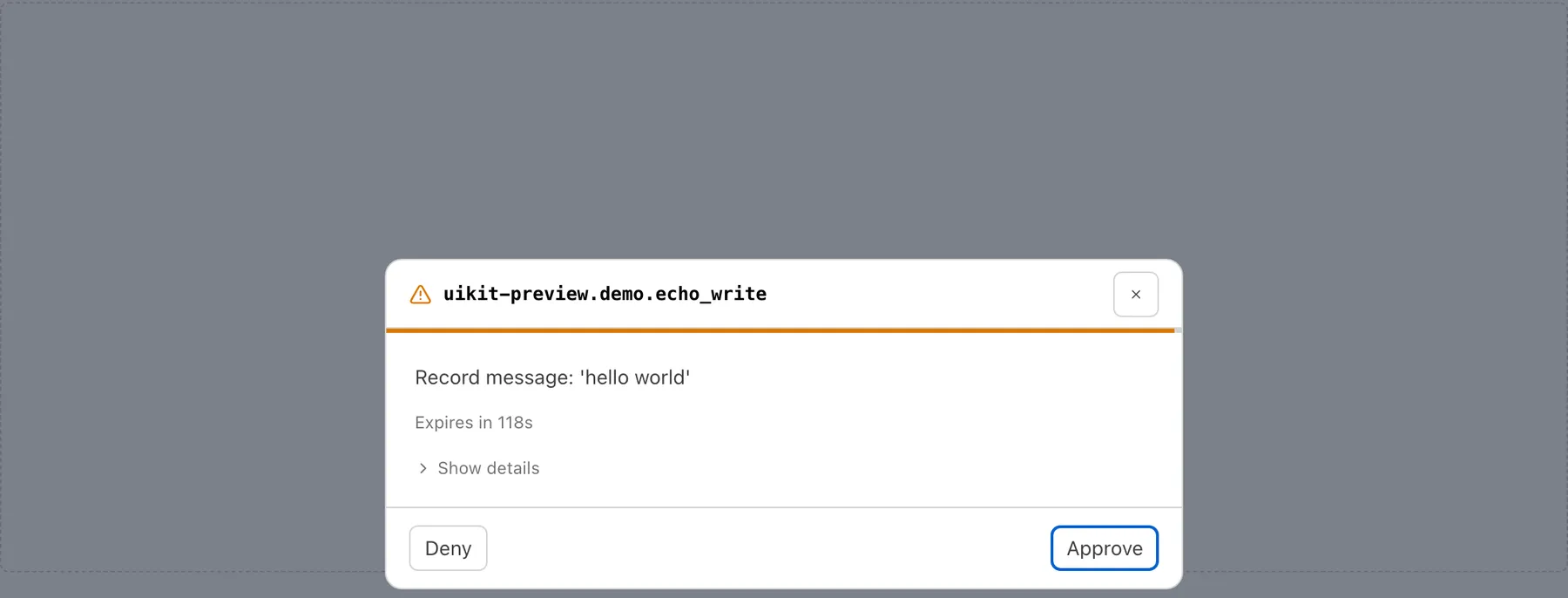
The browser tools distinguish read operations from mutations. Reads can proceed directly; each mutation waits for a person to approve or deny it.
A pending call shows the tool and its arguments, which can be expanded for review. A person can approve or deny it. Calls expire after a timeout, so an unattended tab does not leave mutations authorized.
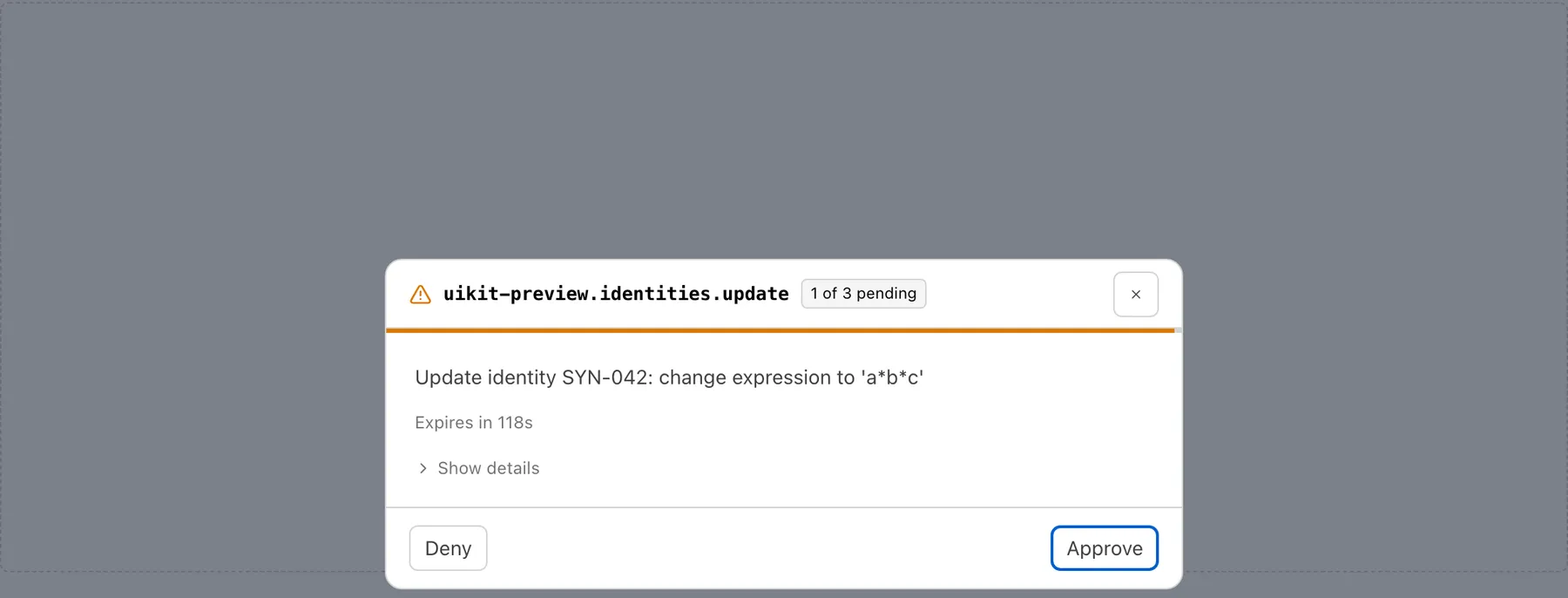
Calls are queued and presented one at a time, so mutations from a single agent turn are reviewed in sequence.
Shared interface principles
The chart group shares cursor state across charts. The browser tool layer exposes selected application operations to an agent and requires human approval for mutations.
The agent relay contains a session state machine, token minting and wire framing, with transport kept separate. The demo runs it in a Cloudflare Worker.